

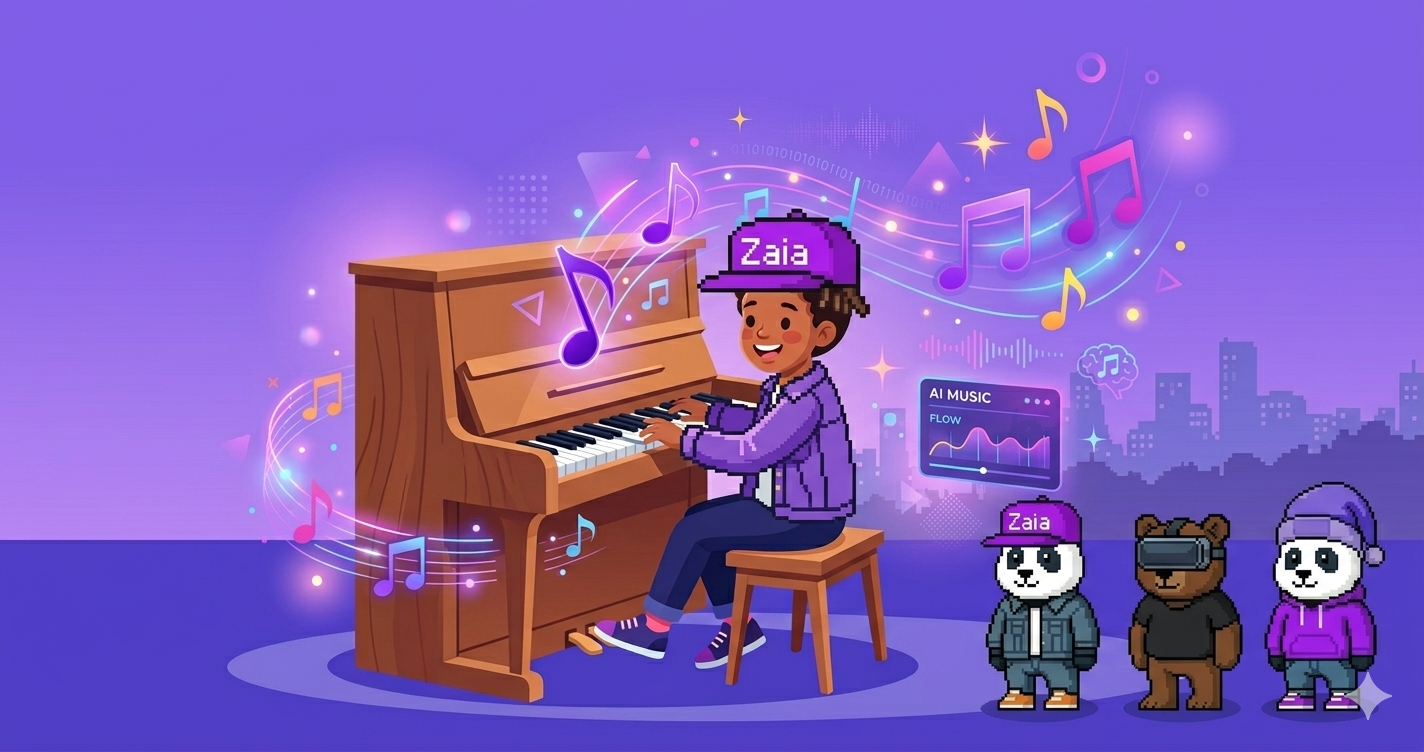
The Technical Problem with Early Music Education
Early childhood music education — the process of developing musical sensitivity, rhythm recognition, pitch awareness, and expression through music — is, at its core, a practice that requires continuous, personalized, and non-judgmental feedback. But here’s the real technical challenge: most children between ages 3 and 10 in Brazil don’t have access to qualified music educators. According to music education organizations and educational data, the majority of Brazilian public schools lack structured music education programs, creating a significant gap in child development. Even where classes exist, the learning pace is uniform — one teacher serves 20 children with completely different musical needs.
Artificial intelligence doesn’t solve this alone. But well-built AI agents — systems that recognize sound patterns, adapt difficulty in real time, deliver immediate feedback, and sustain engagement through gamification — function as a personalization layer that was previously technically impossible at scale.
What’s changing now is that tools like Google Lyria 3 (launched in February 2026) and real-time audio recognition platforms are making it viable to build educational agents that:
- Recognize whether a child is playing the correct note
- Adapt task complexity based on progress
- Generate non-judgmental feedback in seconds
- Create musical compositions to motivate practice
This is not passive entertainment. It’s pedagogical infrastructure.
How AI Works in Music Education: The Basic Architecture
An AI agent for early childhood music education operates across three technical layers:
1. Audio Recognition (Input)
The first layer processes the sound the child produces — whether singing, playing an instrument, or clapping a rhythm. Machine learning models — algorithms trained on millions of audio samples — can identify:
- Frequency (pitch): is the note correct, too high, or too low?
- Duration: is the rhythm aligned with the expected beat?
- Intensity: is the child playing with enough force?
This analysis happens in real time — with latency under 500 milliseconds — enabling instant feedback. Apps like GuitarTuna, Chordify, and Simply Piano have used this technology for adults for years; it’s now being adapted for children with simplified interfaces.
2. Processing and Decision-Making (Logic)
The second layer is where pedagogy meets AI. The agent doesn’t just detect errors — it decides:
- What’s the appropriate next step? (Increase difficulty, repeat, switch exercise)
- How to motivate without frustrating? (Gamification, rewards, narrative)
- What feedback is most useful right now? (Specific praise, technical tip, or simple encouragement)
This requires prompts — natural language instructions that embed pedagogical principles. A good agent for childhood music education might include logic like: “If the child gets it right 3 times in a row, increase difficulty. If they miss twice, give an audio cue before a visual one.”
3. Content Generation (Output)
The third layer generates feedback and the next exercise. This is where generative music comes in — the ability to create original musical sequences on demand. Google Lyria 3 is one example: it can generate 30 seconds of music with a specified genre, tempo, and style. For children, this means:
- Creating a personalized melody to practice a specific note
- Generating a rhythmic accompaniment that adapts to the child’s pace
- Composing a short song to reward progress
The Critical Difference: Educational AI vs. Entertainment
Here’s the point most articles about “AI for children” miss: a tool that simply generates beautiful music is entertainment. An AI agent that recognizes a child’s error pattern, adjusts the next task, and provides specific feedback is education. The difference lies in the feedback loop architecture — the ability to learn from the child’s performance data and iterate.
Practical Applications and Available Tools: What Already Exists
Category 1: Real-Time Recognition and Feedback Apps
Perfect Piano, Simply Piano, and Flowkey already use AI to detect when a child plays an incorrect note. The breakthrough in 2026 is precision: more sophisticated audio models can now differentiate between “wrong note” and “right note but poor technique” — useful for detecting when a child is using incorrect posture.
Practical example: a 6-year-old uses Simply Piano. She plays a C when it should be a D. The app doesn’t just show “wrong” — it displays the correct note visually and plays a comparative audio sample. If she misses the same spot three times, the agent offers a slower version of the same sequence.
Category 2: Personalized Music Generators
Google Lyria 3 is the most recent example. Integrated with Gemini, it allows music creation from text descriptions. For childhood education, the use case is: a teacher or parent describes “an upbeat song in C major to practice high notes” and the system generates a 30-second track.
Suno and Udio, generative AI music platforms, reached 2 million paid users in 2026 (according to public data from Suno). While they face copyright disputes with the professional music industry, for childhood education there’s no conflict — the music is generated specifically for pedagogical purposes, not for sale.
Category 3: Smart Virtual Instruments
Projects in development at educational innovation centers combine traditional instruments with AI feedback. The child plays a real instrument, but a connected app provides:
- Visual rhythm indicators
- Pitch feedback
- Difficulty progression
- The ability to practice silently with headphones (useful in shared spaces)
Category 4: Practice Assistants with Agents
Still in beta, some edtech startups are building “virtual music teachers” — agents that don’t just recognize errors, but converse. A hypothetical example:
- Child: “I can’t remember this note”
- Agent: “Let’s try it differently. Sing along with me” [plays the note]
- Child sings
- Agent: “Great! Now try it on your own”
This requires natural language processing (NLP) beyond audio recognition — more complex, but viable with modern LLMs.
Evaluation Criteria: What Separates a Good Tool
It’s not enough for a tool to “use AI.” Ask:
- Does it offer real-time feedback or only post-session?
- Does the agent learn from the child’s mistakes, or does it always offer the same exercise?
- Is there a clear pedagogical model behind it (e.g., Orff, Suzuki, Kodály)?
- Is the child’s data encrypted and not sold?
Pedagogical Benefits: More Than Gamification
Personalization at Scale
A teacher can personalize the learning pace for 1 to 3 children. An AI agent can do it for hundreds simultaneously. Each child progresses at their own pace, without pressure to keep up with the class.
Immediate and Non-Judgmental Feedback
Children learn better when feedback is instant and doesn’t carry emotional weight. An AI agent never gets frustrated, never humiliates. This reduces performance anxiety — a critical factor in childhood music education.
Proven Cognitive Development
Neuroscience research shows that musical learning:
- Improves language processing (overlapping brain areas)
- Develops working memory
- Enhances fine motor coordination
AI doesn’t change that. But it allows more children to access this stimulation.
Accessibility for Children with Special Needs
A child with attention deficit can use the tool in 5-minute sessions instead of 30. A child with dyslexia can learn rhythm without reading sheet music (the agent shows it visually). A child with deafblindness can use tactile feedback combined with visual indicators.
Challenges and Ethical Considerations: What Nobody Talks About
Data Privacy
According to a 2025 study published in Education Week, 39% of mothers don’t know how their children’s educational tools collect data or don’t understand how that tracking works. A music AI tool collects:
- Voice/instrument audio
- Progress data (how many times they missed, how long it took)
- Usage patterns (time of day, frequency, duration)
This data is gold for children’s marketing companies — and requires strict protection. This is especially critical in AI tools that collect audio data (voice/instrument) — sensitive biometric information. COPPA (US) and LGPD (Brazil) require explicit parental consent. Recommendation: before adopting any platform, review its privacy policy and look for LGPD or COPPA certifications.
AI Doesn’t Replace, But May Displace
There’s a real risk that well-built AI agents lead parents and schools to think “we don’t need a music teacher anymore.” Technically possible? Yes. Pedagogically desirable? No. An AI agent is a complement — it provides practice, feedback, motivation. But the human relationship, the inspiration, the model of a real musician — that remains irreplaceable for children.
Copyright in Generative Music
Suno and Udio are facing lawsuits from major record labels over copyright. For childhood education, it’s less problematic (educational use is protected in many jurisdictions). But there’s an ethical question: should we train AI models on music from living artists without compensating them? There’s still no clear answer.
The Technology-Child Development Balance
Children need physical movement, social interaction, and free play. One hour of AI practice is valuable. Three hours replaces healthy development. Parents need clear guardrails — and tools should have built-in session limits.
Practical Implementation: How to Get Started
For Parents:
- Choose a tool with a clear pedagogical model — not just “it uses AI”
- Start with 15–20 minutes per day, no more
- Keep in-person lessons with a teacher (AI complements, doesn’t replace)
- Review the privacy policy — look for:
- Data encryption
- No data sold to third parties
- LGPD/COPPA compliance
- Watch for engagement: if the child is enjoying it, great. If frustrated, adjust or stop.
For Music Educators:
Integrate AI as a between-lesson practice tool, not during lessons. Example:
- In-person lesson (30 min): introduce concept, technique, musicality
- AI practice (15 min/day): reinforcement, feedback, repetition
- Next lesson: build on recorded progress
Traditional methods (Orff, Suzuki, Kodály) already emphasize repetition and feedback — AI accelerates that part, freeing you to focus on expression and creativity.
For Music Schools:
If you’re considering adopting a platform:
- Test with a small group (10–15 children)
- Measure: did engagement increase? Did retention improve? Are parents satisfied?
- Integrate with the existing curriculum — don’t replace classes
- Train teachers to use the generated data (progress reports)
Closing: AI as Infrastructure, Not Gimmick
Well-built AI agents for early childhood music education are not educational toys. They are pedagogical infrastructure — tools that solve a real technical problem: how to deliver personalization, immediate feedback, and structured practice at scale.
Google Lyria 3, audio recognition platforms, and conversational agents are creating possibilities that didn’t exist three years ago. But the quality of the agent’s design determines the outcome. A poorly built agent gamifies without teaching. A well-built agent gamifies while teaching.
Over the next 2–3 years, expect:
- More sophisticated agents that understand musical style (not just notes)
- Integration with wearables (bracelets that detect movement/rhythm)
- Support for multiple languages and musical cultures
- AI models trained specifically on music pedagogy (not generic ones)
The question isn’t “will AI replace music teachers?” The answer is no. The right question is: “How do we use AI so that more children have access to quality music education?”
Before choosing a solution, understand what’s under the hood. Watch an agent in action — build your own for free on platforms like Google Lyria or try apps like Simply Piano.